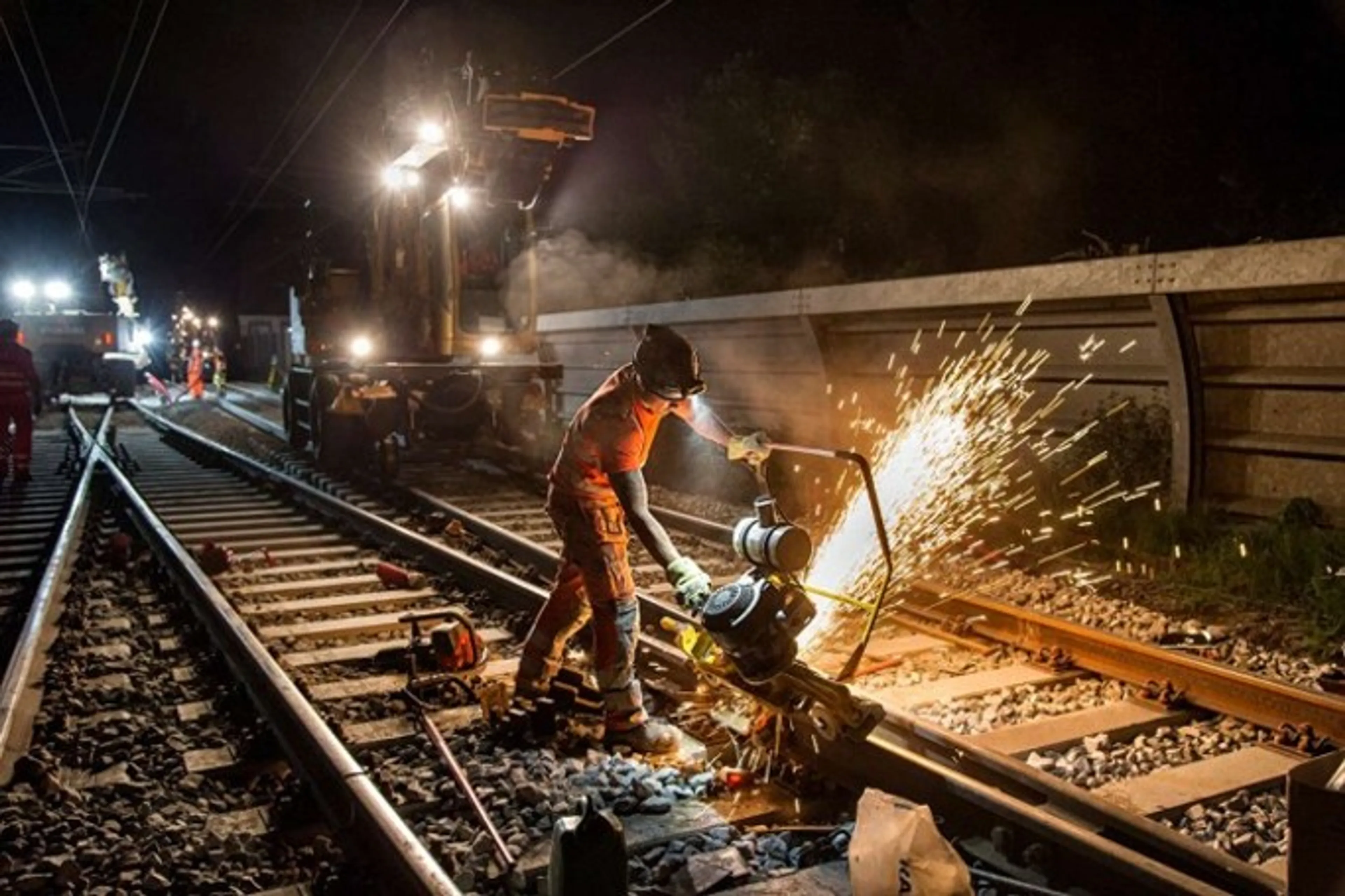
From 1 January 2027, DSB is the infrastructure manager for the S-train network. This means that all track closures on the S-train network must be requested from and approved by DSB – regardless of which client is carrying out the work.
When must a track closure be requested?
Clients must always request a track closure when work takes place in or around the S-train network area and requires DSB to establish a safety zone or access to tracks.
A track closure must therefore be requested if the work:
- prevents trains from running on a track
- requires reduced operations (e.g. single-track operation)
- otherwise affects normal train operations
- requires a track to be closed for safety reasons – even if train operations are not affected.
The most important information for clients
Who can submit a request?
All clients can submit a request, including Banedanmark, municipalities, utility companies, contractors, etc.
How to submit a request
Send a request to [e-mail] including:
- a description of the project and the work
- the desired period and geographical scope
- an estimate of how much the work will affect operations (see the guide below)
- any safety requirements or necessary permits
- contact details for a contact person.
How is the traffic impact assessed?
As a client, you are not required to carry out detailed calculations, but simply to provide a practical estimate. The client must describe the type of closure (partial closure, single-track operation or total closure) and provide an estimate of the traffic impact. DSB will then assess whether it is possible to grant the requested track closure.
Use these examples as the basis for the estimate:
Impact of more than 30% for more than seven days (High to Major category)
- Longer total closures, e.g. for major construction works such as bridge or tunnel projects.
- Partial closures affecting a line, e.g. when upgrading a station or establishing new tracks.
- Multi-week works with ongoing operational changes, e.g. during extensive renovations or new construction.
Impact of more than 50% for up to seven days (Medium category)
- Extended single-track operation, e.g. when replacing rails or carrying out major signalling work.
- Reduced frequency on an entire line, e.g. when work requires repeated closures over several days.
- Significant rerouting or the introduction of replacement buses, e.g. when a station or an entire section is closed.
Impact of up to 30% for an extended period or less than 50% for up to seven days (Low to Minor category)
- Shorter works, typically under 12 hours, where trains can still run.
- Partial closure of a track or platform, e.g. when replacing components.
- Brief single-track operation outside peak hours, e.g. for minor maintenance tasks.
Deadlines for requesting track closures
The deadlines below indicate the latest point at which DSB must have received a fully documented request for a track closure.
Please note that the deadlines only apply to requests that are sufficiently documented for DSB to assess the closure's significance for safety and operations. Incomplete requests will therefore not be considered as having been received on time.
The deadlines are calculated in relation to the timetable year and do not apply on a rolling basis throughout the calendar year. A timetable year runs from the annual timetable change in December, typically the second Sunday in December, to the next timetable change the following year.
The table below shows how track closures are categorised by duration and traffic impact, and the latest date by which DSB must receive a fully documented request.
Note: There may be a potential inconsistency in the example "extended single-track operation" under the category up to seven days. If "extended" means more than seven days, the example should be placed in a different category or clarified.
DSB's assessment of the closure request
DSB processes all requests for track closures based on an overall assessment aimed at minimising the impact on passengers and ensuring stable operations. For closures that affect train traffic, the assessment is carried out in dialogue with the client in order to determine the type of closure and the time period that is most appropriate overall. On this basis, DSB issues the track closure circular, which serves both as the formal allocation of the closure and the precise definition of the area and time period. The circular is sent to the email address provided in the request.
All requests for track closures on the S-train network must be submitted using the current standard form for track closures.
Power supply interruptions in connection with track closures are ordered separately from Banedanmark.
Important information
- The deadlines are necessary to ensure stable train operations and coordination with other works.
- Even if the deadlines are met, a closure may be rejected if it cannot be carried out without a disproportionate impact on the S-train network.
- On the day itself, DSB's Traffic Control may reject a closure due to the current operational situation.
Contact
Do you have questions about the process or the deadlines? kapacitetsdisponering@dsb.dk